Lost Cause 101
Rewriting the history of the Civil War began immediately

The Basics
The Lost Cause is a slippery thing. I think of it as a shape-shifting narrative, which is why it makes it hard to define. It may have been born in the South, and spent its adolescent years there, but it became an adult in places beyond the South.
There remain, however, basic definitions and essential tenets.
The term “Lost Cause” was coined by Edward Pollard in his book of the same name. He took credit for popularizing it and was even “braggadocious” about it. Simply defined, the Lost Cause refers to the defeated Confederate cause.
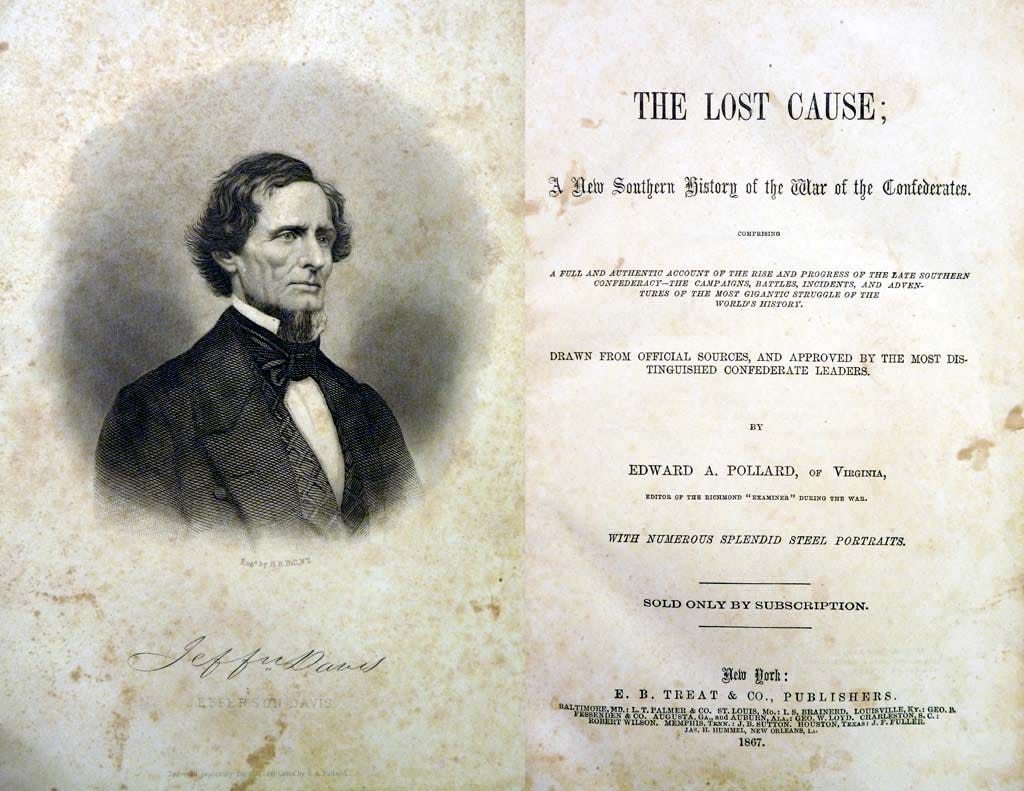
Initially, white southerners used it to help them make sense of their loss, and several writers contended that the Lost Cause remained a “sacred” and “just” cause, including Pollard. God, some said, was on their side. In fact, if you’re interested in the “godly” aspects of the Lost Cause, I highly recommend Charles Reagan Wilson’s book, Baptized in Blood: The Religion of the Lost Cause, 1865-1920.
There were also its basic tenets or beliefs.
The war was fought to preserve states’ rights, not slavery, omitting that the specific right of states was to maintain slavery.
The Confederacy maintained the legacy of the American Revolution by resisting the tyranny of the federal government. Again, the “tyranny” was about the government’s interference in the institution of slavery.
Confederate soldiers, who the white South deemed the better soldiers, lost the war only because they were outnumbered and the North had more munitions.
All Confederate soldiers were heralded as heroes for their sacrifice to the “cause.” You never hear about the deserters.
Slavery was a benevolent institution and was necessary to prevent a race war.
During Reconstruction the Lost Cause evolved to include praise for the Ku Klux Klan, a white vigilante group made up of former Confederate leaders and soldiers, for their role in restoring white supremacy. Of course, there’s no mention of how they terrorized and brutalized Black southerners.*
Confederate Heritage Organizations
Then there are the groups who drew from the Lost Cause mythos: Ladies Memorial Associations were formed in communities almost as soon as the last shots of the Civil War were fired. The United Confederate Veterans were established in 1889, then the United Daughters of the Confederacy in 1894, and the Sons of Confederate Veterans in 1896.
Putting it in writing
There were also the publications. The Southern Historical Society Papers, the first volume of which was published in 1876, were written by Southern soldiers, politicians, civilians, and Confederate leaders who wanted to ensure their side of the story was told “impartially.”
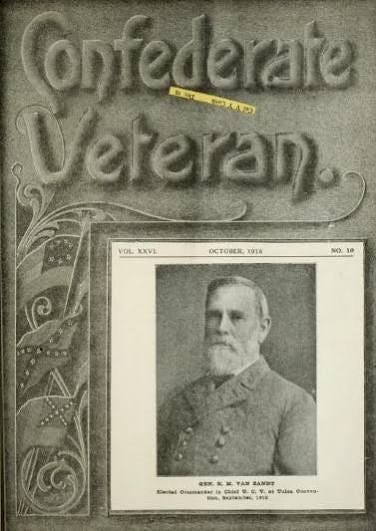
The Confederate Veteran came later. It was a periodical that appeared monthly beginning in 1893. The publisher, Sumner A. Cunningham, was a Confederate veteran and journalist and he kept the magazine going until his death in 1913. The magazine became the official publication of Confederate heritage organizations where they shared war stories and posted coverage and photos of the latest monument unveiling.
There were also the books: history, memoirs, and novels. Some books paraded as history, but were essentially fiction. Several books functioned as a desperate attempt to resuscitate the reputation of military leaders. LaSalle Corbett Pickett, for example, not only wrote a book about her husband, the controversial Gen. George Pickett, she made a career out of defending his reputation after his failure at Gettysburg.
Nineteenth century biographies of Lee quickly slipped into hagiography, as was the case of A Life of General Robert E. Lee, by John Esten Cooke, published in 1871.
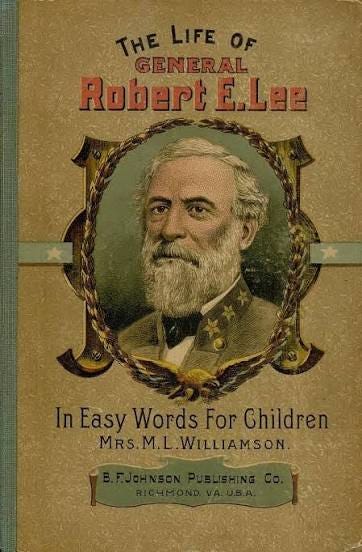
Children were not left out. In 1918, Mary L. Williamson published her biography, The Life of Gen. Robert E. Lee, for Children, in Easy Words. She wrote another on Stonewall Jackson.
*I’m going to have to save Thomas Dixon’s trilogy on the Ku Klux Klan for another post.
The Publishers
There were few publishing houses in the South, like B.F. Johnson in Richmond, Virginia, but the truth of the matter is the Northern publishing industry was on board, and profited handsomely from selling Lost Cause publications.
The point of all this is convey that promoting the Lost Cause (narrative, mythology, mythos, ideology, falsehoods—take your pick) became a cottage industry in the decades after the Civil War and has a lot to do with why it continued to shape peoples’ understanding of the South well into the twentieth century.
KLC